EN
EN


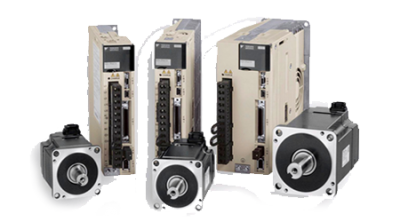
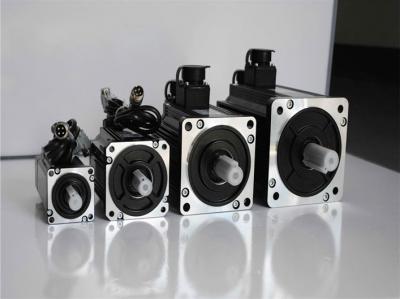
AC motor servos primarily consist of two main parts: the stator and the rotor. The stator acts like the "fixed shell" of the motor, inside which a three-phase winding is wrapped. When three-phase AC power is supplied, it generates a rotating magnetic field, which acts like an invisible "big hand" driving the motor. There are two common types of rotors: one is the squirrel cage type, which looks like a small cage with bars inside, and the other is the permanent magnet type, which carries permanent magnets capable of creating its magnetic field.
When the stator's rotating magnetic field starts moving, it cuts through the rotor's bars (squirrel cage type) or interacts with the magnetic field of the permanent magnet type rotor, thus generating electromagnetic force on the rotor, making it rotate. However, a key element here is that AC motor servos have a control system. This system includes a driver, a controller, and an encoder. The encoder functions like the "eye" of the motor, constantly monitoring the position, speed, and other conditions of the motor shaft, and then feeding this information back to the controller. The controller compares the feedback information with the preset target values. If it detects any deviation, it immediately adjusts the motor's current, voltage, etc., through the driver to make the motor's rotation more precise. For example, on an automated production line, there's a task to accurately place different shaped parts in the corresponding positions. Upon receiving the command, the AC motor servo starts to rotate based on the preset program. The stator magnetic field rotates quickly, driving the rotor to precisely control the movement of the robotic arm. If, during the movement, the speed or position of the robotic arm slightly deviates due to the weight or inertia of the parts, the encoder will detect it immediately, and the controller and driver will quickly adjust to ensure the robotic arm accurately places the parts.
Additionally, when installing AC motor servos, ensure that the installation surface is flat and solid; otherwise, the motor may shake during operation, affecting precision and lifespan. Also, the motor's wiring must be correct and secure. If the wiring is loose or incorrect, the motor may not rotate properly, or it could potentially damage the motor. During use, select an appropriate motor specification based on the actual load condition. If the load is too large, the motor may not be able to operate, staying in an overloaded state, which not only affects work efficiency but also shortens the motor's lifespan. Regular maintenance is also crucial, such as checking the motor's cooling condition to see if dust or debris is blocking the cooling channels, and inspecting the encoder's connection to ensure it accurately feeds back information.
We hope this article provides you with useful insights into the working principles and practical techniques of AC motor servos. If you have any further questions or needs, feel free to contact us at any time. We look forward to working with you to provide excellent servo motor solutions!
 Call us on:
  Email Us:
  1103, Block C, South Building, Luo Fang Road, Luohu District, Shenzhen, 518001, China