EN
EN


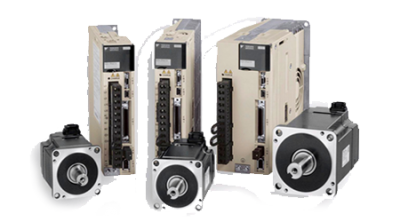
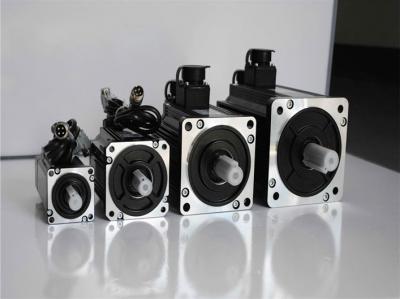
Panasonic servo motor, today I will tell you what are the common alarm faults of Panasonic servo motor? How to deal with common servo driver faults. The application of servo motors is becoming more and more widespread. Although the quality is getting better and better, if you do not pay attention to maintenance and care in daily use, no matter how good the product is, it cannot withstand the tossing. In the daily production process, the servo motors may be damaged due to long-term continuous use or If the user does not operate it properly, motor failure will often occur, and maintenance is relatively complicated.
Common alarm faults of Panasonic servo motors
Overtravel fault
When the servo motor movement exceeds the soft limit set by the software or the hard limit set by the limit switch, an overtravel alarm will occur. Generally, the alarm content will be displayed on the CRT. According to the server maintenance manual, you can Troubleshoot and clear the alarm.
Overload fault
When the load of the servo motor movement is too large, frequent forward and reverse movements, and poor lubrication status of the transmission chain, an overload alarm may be caused. Generally, alarm information such as servo motor overload, overheating or overcurrent will be displayed on the CRT. At the same time, on the servo drive in the control cabinet, the indicator light or digital tube will display maintenance fault information such as overload and overcurrent of the servo drive unit.
Coupling fault
The vibration phenomenon in the servo motor can be divided into the following three situations: ① The speed measurement signal is unstable, such as speed measurement device failure, speed measurement feedback signal interference, etc.; ② The speed control signal is unstable or interfered with; ③ The terminals are in poor contact, such as loose screws. wait. When a backlash fault occurs at the moment of reversal from forward motion to reverse motion, it is generally caused by the backlash of the servo motor's transmission chain or the servo system gain being too large.
Crawl failure
This type of servo motor maintenance failure occurs during the starting acceleration section or low-speed feed. It is generally caused by factors such as poor lubrication of the servo motor's transmission chain, low gain of the servo system, and excessive external load. Special attention should be paid here: the coupling used to connect the servo motor and the ball screw, due to loose connection or defects in the coupling itself, such as cracks, etc., causes the rotation of the ball screw to be out of sync with the rotation of the servo motor, thus causing the The servo motor may also move quickly and slowly, causing crawling.
Servo motor does not rotate fault
When the CNC system sends to the servo drive unit, in addition to the speed control signal, there is also an enable control signal, which is generally DC+24V relay coil voltage.
Common troubleshooting methods for servo drives:
① Check whether the CNC system has speed control signal output;
② Check whether the enable signal is turned on. Observe the I/O status through CRT and analyze the machine tool plc ladder diagram (or flow chart) to determine whether the starting conditions of the feed axis, such as lubrication, cooling, etc., are met;
③ For servo motors with electromagnetic brakes, check whether the electromagnetic brake is released;
④Servo drive unit failure;
⑤The servo motor fails.
In addition, when using the servo motor, we should also pay attention to the fact that when the power is on, the angle of the servo cannot be pulled hard, otherwise the motor will be damaged. If you need to change the status of the servo, you must turn off the power and make adjustments. The working voltage of the servo motor can only be 5V, and its working voltage cannot be changed. The servo motor runs slowly but has a relatively strong force. Therefore, there should not be strong resistance to hinder the movement of the servo motor during the movement, otherwise it will also cause damage.
 Call us on:
  Email Us:
  1103, Block C, South Building, Luo Fang Road, Luohu District, Shenzhen, 518001, China