EN
EN


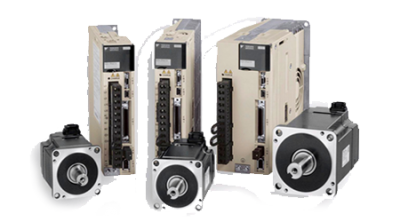
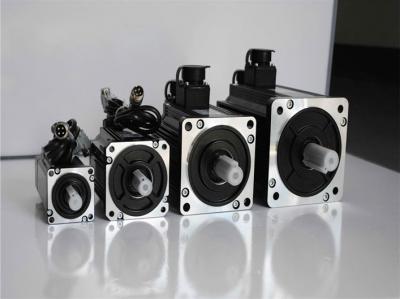
To ensure that the AC motor servo performs optimally in different equipment, selecting the right model is very important. This article will summarize the key points for you.
It determines the amount of energy the AC motor servo can continuously output. Take a CNC machine tool as an example. During high-intensity metal cutting operations, the AC motor servo needs to provide sufficient power to drive the tool to rotate at high speed and cut the metal. If the power selected is too low, the AC motor servo may overheat due to overload, which not only affects machining accuracy but may also damage the AC motor servo motor. Conversely, if the power is too high, it will lead to resource waste and increased costs.
In high-speed sorting equipment on an automated production line, the AC motor servo needs to quickly drive the conveying device to operate, sorting items quickly and accurately into different areas. At this time, the rated speed of the AC servo motor must match the speed requirements of the production line to ensure an efficient production rhythm. If the speed is too low, it cannot meet production efficiency; if the speed is too high, it may exceed the mechanical tolerance of the equipment, leading to equipment failure.
For equipment like cranes that need to move heavy objects, the AC servo motor must have sufficient starting torque and stable running torque to smoothly lift and move heavy objects. If the starting torque is insufficient, the heavy object may not be lifted; if the running torque is unstable, it will cause the heavy object to sway in the air, posing a safety hazard.
In the process of manufacturing electronic chips, the AC motor servo of a lithography machine needs to precisely control the movement of the worktable. Its positional accuracy should reach the nanometer level, and its speed and torque precision must also be extremely high to ensure that circuit patterns on the chips are accurately etched. Any slight deviation may lead to chip scrap.
The joints of industrial robots move frequently and quickly, and if the inertia of the AC motor servo does not match the load inertia, it will affect the robot's response speed and movement accuracy. When the inertia of the AC motor servo is too small, it cannot drive the load to move quickly and accurately; if the inertia is too large, the AC motor servo will react slowly, making it difficult to execute complex action commands.
In conclusion, accurately grasping various parameters when selecting an AC motor servo is the key to stable and efficient operation of the equipment. Different application scenarios have different emphases and requirements for these parameters. We must have a deep understanding of the working characteristics and needs of the equipment and comprehensively consider various parameters to weigh pros and cons. Only in this way can we select the most suitable AC motor servo and let it perform at its best in each role.
 Call us on:
  Email Us:
  1103, Block C, South Building, Luo Fang Road, Luohu District, Shenzhen, 518001, China